2026 Fishing Season Forecast
Posted on April 11th, 2026 in Season Forecasts, Weather & Water Conditions
Introduction: We’re Heading for Serious Drought
We got a below-average amount of snow this winter, winter was record-warm, the snow started melting six weeks early, and the summer outlooks are calling for hot and dry conditions. Those are the facts we’re dealing with this year. Here’s how it will impact the fishing.
First, some photos, since they’re worth a thousand words.
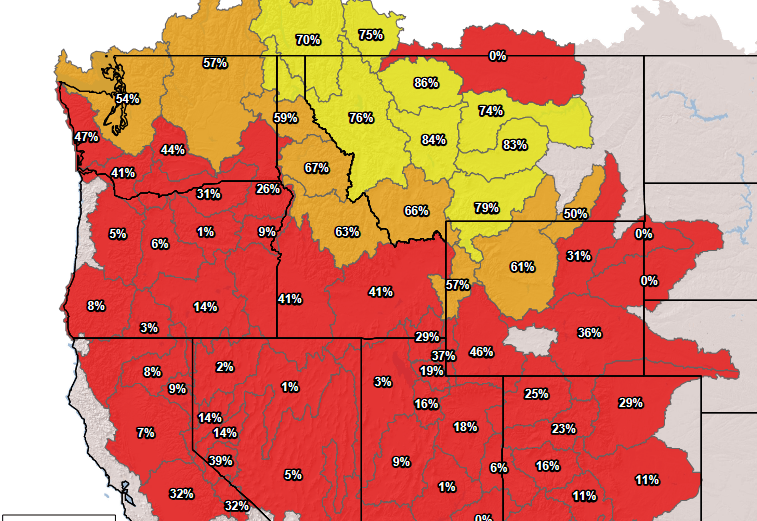
In this first one, the core of our operations area is that 79% basin in southern Montana. Portions of our operations area extend into that 66% basin and the 84% to the northwest. As you can see, we’re low, but still better off than anywhere else in the West. Colorado, Utah, and Oregon are in absolutely dire straits.
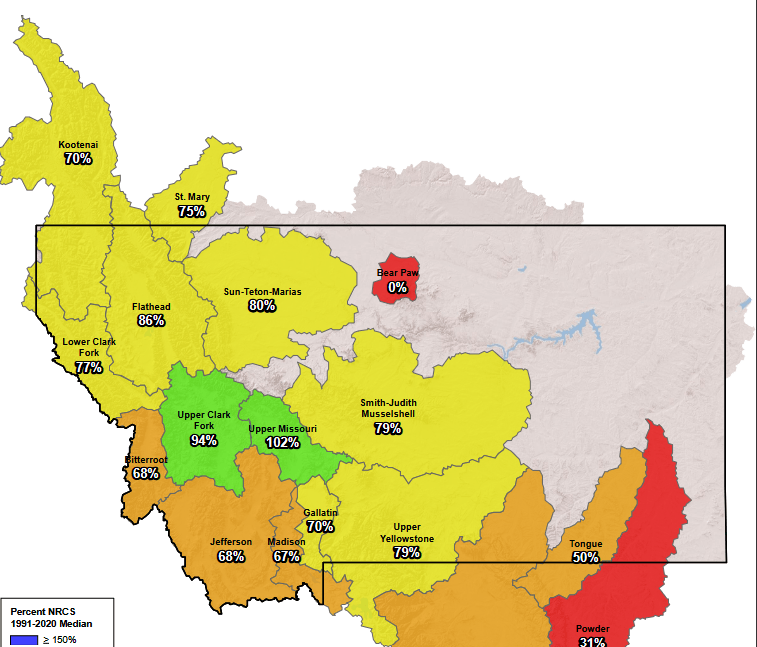
Next is Montana in particular, which breaks things down further. Not captured here is the “granular” number for the headwaters of the Yellowstone River in Wyoming, which are at 88% of normal. This number influences the number for the Yellowstone Basin as a whole, so the Upper Yellowstone in Montana proper is actually below the 79% number. The Boulder, Stillwater, and Shields Rivers are thus well below the Yellowstone Basin as a whole, while streams in Yellowstone Park including the Lamar River and Gardner River are slightly higher.
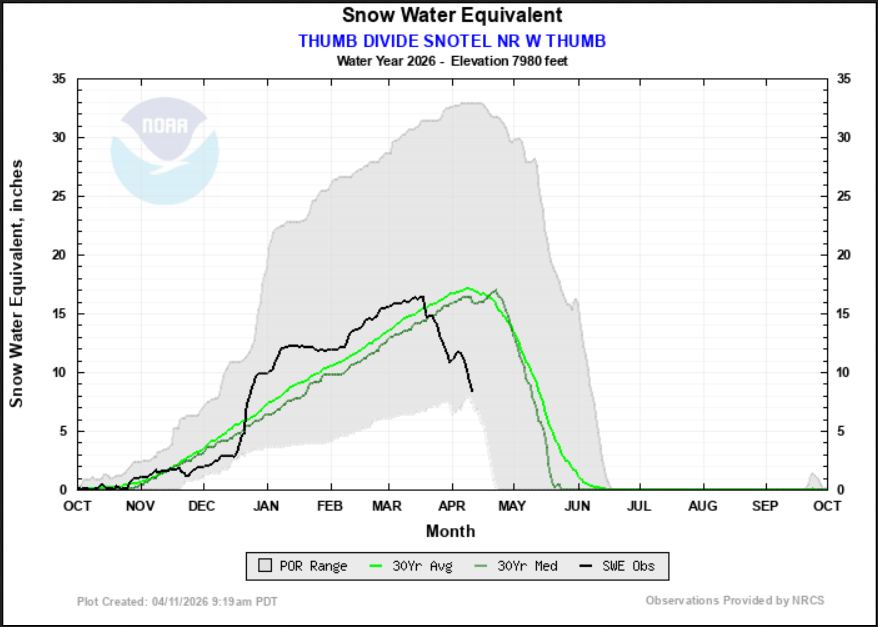
Here’s a graph that really illustrates the snowpack collapse. This is the Thumb Divide Snotel in Yellowstone Park. The black line is this year. The light green and dark green are the mean and median, respectively. The gray field represents the range of annual snowpacks recorded for as long as this sensor has been active. As you can see, we peaked weeks early and are now crashing out. It now seems likely that this sensor will lose its remaining snowpack before the end of the month, close to a month earlier than normal and maybe at a record-early date.
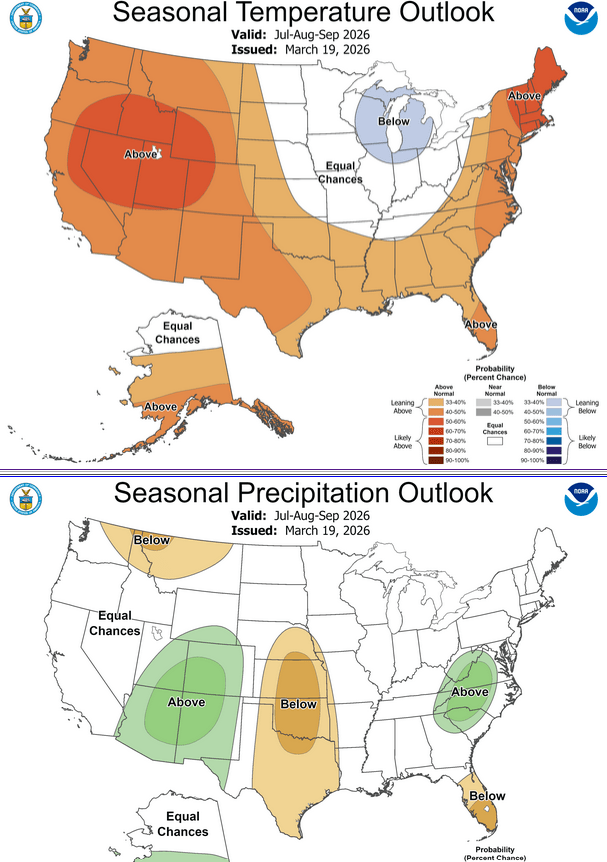
Finally, here’s the NOAA weather outlook for July through September, 2026. This late summer period is the timeframe when hot/dry weather is most likely to reduce angling opportunities, cause fires, and otherwise be a drag. The other rolling three-month outlooks for the remainder of the year both before and after late summer are comparable.
So What Does All This Mean?
It means that unless something very unexpected happens (a bitter cold/wet May followed by a cool, damp summer, neither of which are forecast), we’re going to have record low water (for a given date) starting sometime in early June. This water is going to get very warm and threaten all-time record lows in late summer. All of this adds up to mean much better fishing opportunities in late May and June – when we are usually dealing with the spring snowmelt – but much more challenging (that is to say “probably much worse”) conditions in late summer and early fall. 2:00PM mandatory fishing closures (aka “hoot owl hours”) now seem certain beginning in the latter half of July and extending into September. Widespread complete fishing closures are possible in August.
When Should I Fish?
MUCH EARLIER IN THE SEASON THAN USUAL. This cannot be overstated. June is likely to offer the best fishing on most fisheries in our operations area, certainly mid-June through mid-July at the latest. Late July might be pretty rough. August and early September are likely to be about as difficult as it gets, and fishing opportunities may be very limited if we don’t get some cool, wet systems in August to cut the heat and help flows.
Runoff is basically a non-factor this season. It’s already well underway everywhere, and the extreme early start means a “flatter wave” than usual. While many rivers are dirty right now and will remain so for several weeks, none will ever reach an unfishable flow rate, and all will be somewhere on the downswing to done with runoff by Memorial Day Weekend.
Best & Worse Periods by Fishery
Rivers are given in increasing distance from Livingston, while “classes” of waters (such as mountain creeks) are given at the end.
- Yellowstone River in Montana: Best in June and early July. Likely hoot owl closures from around July 20 through Labor Day.
- Boulder River: Best in late May and early June. Probably too low to float by July 1. Likely hoot owl closures below Natural Bridge from July 20 through Labor Day.
- Gardner River: Best in late May and early June below Boiling River, late June and early July above. Too warm below Boiling River no later than July 1. Likely hoot owls below Osprey Falls from early July through Labor Day.
- Lower Madison River: Best between now and early June. Likely hoot owls from late June through late September. Likely complete fishing closures from early July through early September.
- Gallatin River in MT: Best in June. Likely hoot-owl closures below Gallatin Gateway between July 20 and Labor Day. The upper sections may avoid hoot owl closures. Likely complete closures between Four Corners and the mouth of the East Gallatin in August.
- Yellowstone River Canyons in YNP: Best in June. Likely hoot owls from July 20 through Labor Day.
- Stillwater River: Best in June. Likely hoot owls from July 20 through Labor Day. Too low to float in a full-size raft by the beginning of August.
- Lamar River, Slough Creek, Soda Butte Creek: Best mid-June through mid-July. Hoot owls likely July 20 through Labor Day.
- Gibbon River: Below Norris Hot Springs best in mid-late May and too warm by June 15. Above best in June. Likely hoot owls from late June through late September and complete closures from early July through Labor Day.
- Upper Madison River: Best in late May and June. Potential hoot owls from July 20 through late August, but on this river they may be limited both in duration and in scope. The stretch from the Ennis Bridge to Ennis Lake is the most likely stretch to be closed.
- Firehole River and Madison River in YNP: Best in May. Almost certainly too warm to fish ethically with the onset of the first hot spell in early June. Complete closures are likely from late June through Labor Day and perhaps through September.
- Jefferson River: In all honesty, this river is going to suffer so much this season (as will the lower reaches of its sources the Beaverhead, Big Hole, and Ruby), that we do not recommend fishing it at all this season. We expect full closures on the Jeff, the entire Big Hole, and the lower Ruby and Beaverhead no later than July 20 this season, likely extending through September.
- Missouri River (Tailwaters): Best in late May and June. May or may not experience hoot-owls between July 20 and Labor Day, but will almost certainly be extraordinarily weedy from August through early October. Headwaters reaches (carp water) will probably not see closures.
- Private Spring Creeks: Limited impacts due to the drought, since these are entirely spring-fed. Best fishing (as always) from late June through July.
- Mountain Creeks in Montana: Best in late June and early July. Probably will not see late summer closures, but may be so low that they are unethical to fish, particularly in late August and September.
- Prairie Creeks & Small Rivers in MT: Best in late May and early June. Likely to get too warm to fish ethically in late June or very early July (basically with the first real hot spell). Those that see much pressure, such as the Shields, Smith, and East Gallatin, will see hoot owls for sure by mid-July and may see complete closures in the same timeframe, with all closures lasting into mid-September.
- Mountain Creeks in Montana: Best in late June and early July. We now expect hoot-owls on all flowing water in YNP between late July and early September, and these creeks are no exception.
- Creeks Draining Yellowstone’s Central Plateau: These meadow-type, small streams will be best in June. Hoot-owls are likely between July 20 and Labor Day. It seems likely that they’ll be so low by July 20 that you wouldn’t want to fish them, anyway.
- Private Ranch Lakes: Best from now through early June. Almost certainly too warm to fish well/ethically between June 20 and late September, though they do not actually see any closures since they’re private. It seems likely that many will see fish kills due to warm water this year.
- Low-Elevation Reservoirs: Best from now through late May. Too warm and weedy by mid-June, though unlikely to see closures.
- High-Elevation Drive-Up Lakes and Reservoirs (Hebgen, Yellowstone Lake): Those in Montana are best from now through June. Likely too warm to fish well most days in late summer, though closures are unlikely. Those in YNP open the Saturday of Memorial Day Weekend and should be ice-free and accessible by then. All will fish best in June and be weedy and not so good by mid-July, though 2:00 closures are much less likely on lakes in YNP than on rivers.
- Hike-In Lakes: Those in Montana (Beartooths) will be best in late June and July. August might see tough fishing, though closures are unlikely. Those in YNP will be best in June and many/most will be very tough between mid-July and mid-September, though closures are unlikely.